Welcome!
I am an applied mathematician with a focus on mathematical biology.
My work comprises modelling, analysis and computation to investigate natural phenomena — from bacterial biofilms and their ecological interactions, to cell migration of heterogeneous populations during development and disease. By combining individual-based, continuum, and structured population approaches, I study how living systems self-organise, form patterns, and coordinate collective behaviour.
At the moment, I am a postdoctoral fellow at the Netherlands Cancer Institute (Antoni van Leeuwenhoek), where I work with Kevin Groot Lipman and Sjaak Burgers on modelling tumour volume dynamics in pleural mesothelioma. Building on my background in mathematical modelling of biological systems, I combine mechanistic modelling with statistical and data-driven approaches to investigate how heterogeneous tumours evolve and respond to treatment. With access to a large longitudinal clinical dataset, I will explore a range of modelling approaches, including classical tumour growth models and neural ODEs, to investigate the dynamics captured in the data.
Previously, I was a postdoc at TU Delft, working jointly at the Delft Institute for Applied Mathematics and the Department of Biotechnology, where I collaborated with Havva Yoldaş and Rebeca Gonzalez Cabaleiro.
Before that, I completed my PhD in the MAC-MIGS Centre for Doctoral Training, a joint doctoral programme in applied mathematics between Heriot-Watt University and the University of Edinburgh. My doctoral work was supervised by Kevin Painter, Mariya Ptashnyk and Linus Schumacher, and focused on mathematical models for collective cell migration.
You can reach me here: v.freingruber@nki.nl - viktoria.freingruber@proton.me
Research interests
Data-driven modelling of tumour dynamics
I currently work on data-driven modelling of heterogeneous tumour dynamics in pleural mesothelioma, combining mathematical and statistical modelling with longitudinal patient data. My work explores different approaches to describing tumour development under treatment, including mechanistic models and neural ODEs.
Multi-species bacterial populations with ecological interactions
In my current postdoctoral work, I study multi-species bacterial communities, focusing on how different types of ecological interactions — such as competition, commensalism, and neutralism — shape their spatial organisation and long-term dynamics. These models aim to capture the balance between species, how they coexist, and under which conditions one might dominate or suppress another. A key goal is to connect these theoretical insights with experimental observations of microbial aggregates and biotechnological applications.
- Ecological Interactions and Spatial Dynamics in Microbial Aggregates: A Novel Modelling Framework with H. Yoldaş, R. Gonzalez-Cabaleiro preprint
- Slow-fast dynamics in a spatial multi-species system for nitrifying bacteria (in preparation)
Derivation of continuous models from trait-structured interacting particle systems
Although I formally derive the continuous PDE systems I work with, these formal derivations often lack full mathematical rigour. One of my research interests therefore lies in establishing rigorous derivations of such systems from interacting particle systems. In particular, I aim to derive — in a mathematically justified way — the models I currently use or have used previously, thereby closing the gap between formal modelling and rigorous analysis. I am especially interested in trait- and size-structured interacting particle systems.
- Derivation of a multi-species cross-diffusion system with growth and competition from a stochastic interacting particle system with K. Nik, H. Yoldaş (in preparation)
- New project to be started soon with F. Germ
Structured population models for heterogeneous, migrating cell populations
A key theme in my work is the development of structured population models, where cell populations are described not only by their spatial distribution but also by heterogeneous traits (e.g. phenotypes, receptor expressions, or intracellular variables). These models take the form of non-local partial differential equations and allow the analysis of phenomena such as travelling waves, pattern formation, and self-organisation in cell migration.
- Trait-structured chemotaxis: Exploring ligand-receptor dynamics and travelling wave properties in an extended Keller-Segel model with T. Lorenzi, K. Painter, M. Ptashnyk (link)
- Self-organisation in trait-structured Keller-Segel models for collective chemotaxis with K. Painter, M. Ptashnyk (in preparation)
- Mathematical modeling of collective cell migration: Cell trait structures and intracellular variables (PhD thesis, link)
Individual-based models for cell migration and intracellular states
Cells often migrate collectively while responding to chemical cues in their environment. To capture this, I have developed biased random walk models that describe how individual cells move, interact, and adapt their behaviour based on both external signals and their intracellular states. These models aim to bridge the gap between cell-level dynamics and the emergence of large-scale migratory patterns.
- A biased random walk approach for modeling the collective chemotaxis of neural crest cells with K. Painter, M. Ptashnyk, L. Schumacher (link)
- Mathematical modeling of collective cell migration: Cell trait structures and intracellular variables (PhD thesis, link)
Biofilm models for quorum sensing and quorum quenching
I am interested in how microbial populations coordinate their behaviour through quorum sensing, and how this can be disrupted via quorum quenching strategies. Together with collaborators, I worked on models that couple biofilm growth with quorum sensing signalling molecules and their enzymatic degradation. This research also explored possible applications of quorum quenching as an adjuvant to antibiotic treatment.
- A mathematical model of quorum quenching in biofilms and its potential role as an adjuvant for antibiotic treatment with M. Ghasemi, C. Kuttler, H. Eberl (link)
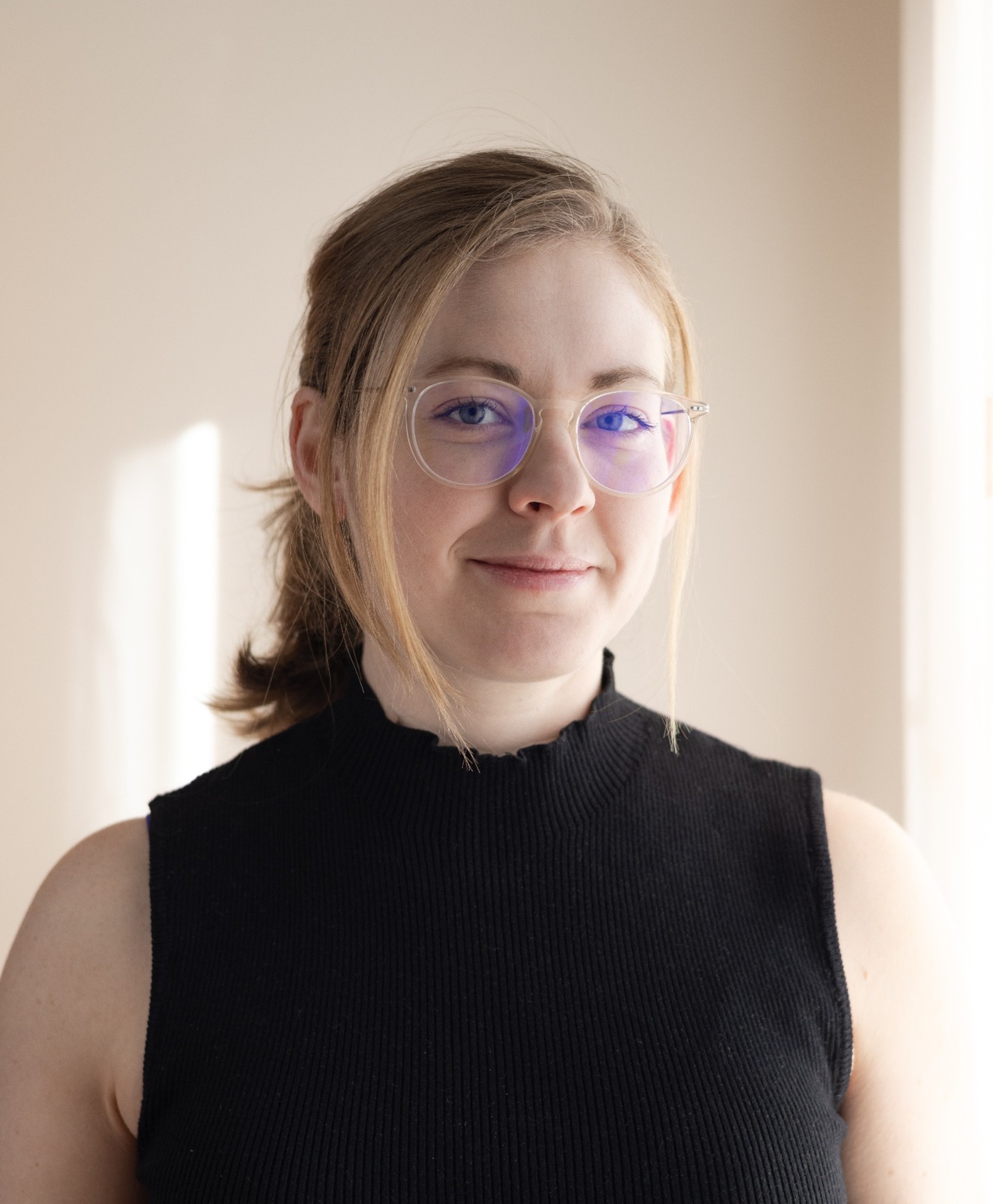
Photo by Verena Freingruber.